

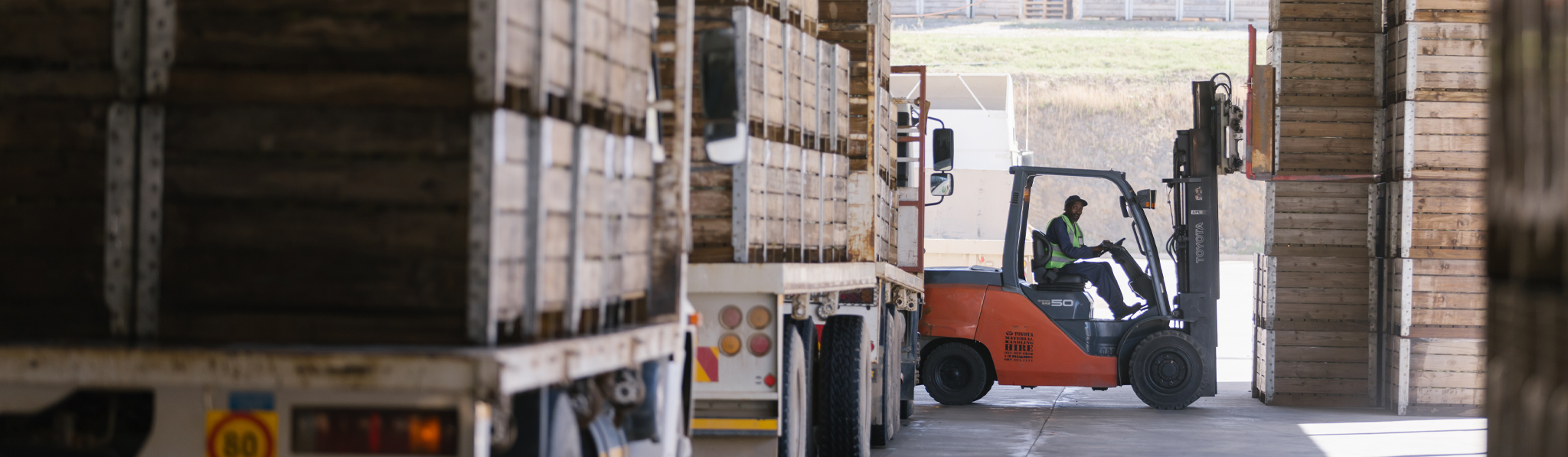
With the season well progressed at Betko, intake remains a constant point of movement as fruit continues to arrive daily from the farms.
Each load enters the system here, setting the pace for everything that follows inside the packhouse. Trucks move in and out continuously, with bins offloaded, checked and directed with precision to keep flow steady throughout the day. In many cases, trucks are turned around within a short space of time, reloaded with empty bins and sent back to the farms to keep the cycle moving.
Alongside the movement of fruit, the availability and flow of bins remains a critical part of intake operations. Ensuring that empty bins are returned to farms in time while managing incoming loads requires careful planning and coordination. At peak times, this balance becomes increasingly important, as delays in bin movement can impact the pace of intake and the wider packhouse process.
As volumes build through the season, the majority of fruit has already been received, with the remaining percentage still expected over the coming weeks. Managing this flow requires careful coordination from the moment fruit arrives, ensuring that intake keeps pace with the rest of the operation.
Depending on the cultivar and demand, bins are often directed into controlled atmosphere storage to cool down and preserve quality. These early decisions play a key role in maintaining consistency later in the process, allowing fruit to be packed at the right time and under the right conditions.
Quality assessment begins immediately at intake. As bins are offloaded, samples are taken and tests conducted to assess pressure, sugar levels and starch breakdown. These checks provide an early indication of the fruit’s condition and help flag any irregularities that may need to be managed further down the line. By the time fruit reaches the packline or pre-sorter, the most important decisions have already been made.
To get a closer look at this process, we shared a three-part visual series on our social channels during April, offering a clear view of how intake unfolds from arrival through to the first quality checks.
As the season progresses, different cultivars move through the system at varying stages. We have been receiving Pink Lady® since mid-April, a cultivar that accounts for approximately 15% of our annual intake, while Golden Delicious remains the largest contributor at around 22%.
With the shift to lower evening temperatures in the Overberg, conditions are favourable for colour development in Pink Lady, supporting the deeper red blush associated with this cultivar. As volumes continue to come in consistently, intake remains focused on steady handling and accurate decision-making from the outset.