

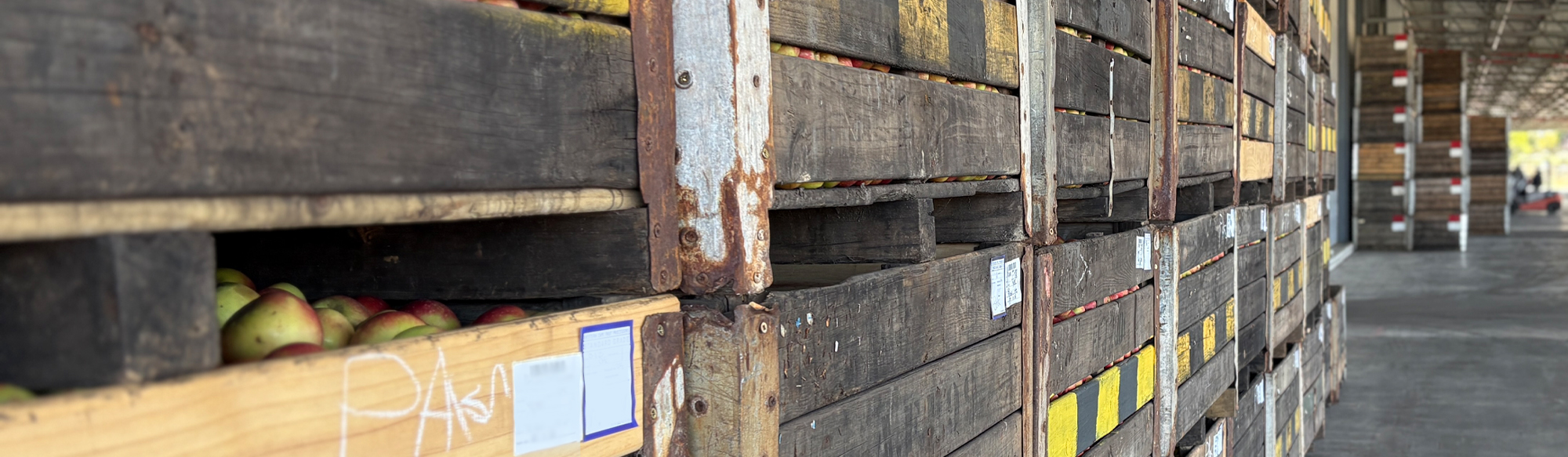
Every season, millions of apples and pears move through our packhouses. Each piece is handled, sorted, and graded – but not all make it into the cartons we supply to retailers around the world. Some fruit simply doesn’t meet the standards for fresh sale due to damage or imperfections.
So, what happens to the ones that don’t make the cut? At Betko, nothing goes to waste.
Fruit can be downgraded or rejected for several reasons. Sometimes it’s due to bruising or cuts from handling during harvest or transport. Other times, the cause might be skin blemishes or marks that affect appearance, undersize or sub-standard colouration, or internal defects such as mealiness or core defects. There are also cases of early signs of decay – not rotten, but no longer suitable for fresh retail sale.
Although these apples and pears aren’t fit for retailers, they are still perfectly usable for juice processing. What matters most is that the fruit remains sound and intact – unsuitable for packing, but still clean and healthy enough to be safely processed into juice. This ensures that the hard work behind each harvest still contributes to the value chain, even if the fruit doesn’t make it to the fresh shelves.
Betko acts as a juice depot, meaning we manage and supply fruit specifically for juice production throughout the year. Because bins can’t be left to accumulate, juice fruit is loaded out continuously as the season progresses. On average, around 8% of Betko’s total fruit intake is dedicated for juicing. This percentage can fluctuate from season to season, depending on the quality of the harvest, weather conditions and the storage ability of different cultivars.
The process begins during packing, where any fruit that doesn’t meet grade is set aside into specially marked processing bins. Some bins are rechecked to extract fruit that still qualifies for local market supply, but what remains is then sent to juice processing factories or, occasionally, to local traders. This approach allows us to manage fruit flow efficiently, maintain quality standards for packed fruit, and ensure that nothing usable is wasted.
Once the fruit reaches a juice processing factory, it undergoes a series of checks before being processed. Juice processors can handle blemished or misshapen fruit, but not rotten fruit. Factories inspect and clean incoming fruit carefully before it’s crushed and pressed to extract the juice. The liquid is then pasteurised to ensure food safety, filtered or concentrated, and stored or packaged for further use. Rotten or leaking fruit is rejected, as it can compromise the flavour, colour, and safety of the final juice product. Only fruit that remains structurally sound is accepted for processing.
Directing lower-grade fruit to juice production is an essential part of responsible fruit management. It ensures that every piece of fruit is used as fully as possible, reducing waste and contributing to a more sustainable fruit industry. It also provides an important secondary market for growers and packhouses, creating added value from fruit that might otherwise be discarded. In this way, the juice industry supports the larger agricultural ecosystem and helps reduce the environmental impact of fruit farming.
Even the by-products from juice production, such as pulp and peels, are often repurposed for animal feed, compost, or natural soil enrichment – giving the fruit yet another life beyond the packhouse. It’s a process that closes the loop and reinforces our commitment to quality, efficiency, and sustainability.
At Betko, we believe that every apple and pear has a purpose. While the best fruit travels to retailers both locally and abroad, the rest continues its journey in another form – as juice, concentrate or feed. Because in a world where quality and sustainability go hand in hand, nothing good should ever go to waste.